Your car was totaled in a crash, and the insurance adjuster just sent you a valuation. The number on that report comes from a company called CCC Information Services, and if it feels lower than what your car was actually worth, you are not imagining it.
CCC is the most widely used total loss valuation tool in the insurance industry. Its reports often undervalue vehicles, and most policyholders accept the number without knowing they can push back. Here is what you need to know about how CCC works, why its valuations come in low, and how to dispute a settlement offer that does not reflect your car’s true value.
What Is CCC One?
CCC Information Services (commonly called CCC One) is a third-party software platform that insurance companies use to calculate the actual cash value (ACV) of vehicles after a total loss. Companies including Nationwide, Geico, and Allstate contract with CCC to generate these valuations.
CCC holds an estimated 75% market share in the insurance total-loss valuation space. Because CCC’s valuations are generated for the insurer and used across millions of claims, they frequently come in below what the open market shows for your specific vehicle.
If you want a plain-English overview of how a vehicle is declared a total loss, our guide walks through the basics.
How CCC Calculates Your Car’s Value
CCC generates its valuations by identifying comparable vehicles in your area, applying condition adjustments, and producing a market value estimate. In practice, the comparables CCC selects are often lower-trim vehicles, vehicles with higher mileage, or vehicles from markets where prices run lower than yours.
Compare this to a platform like vAuto, which aggregates valuations from multiple sources including NADA, Kelley Blue Book, Black Book, Manheim Market Report (MMR) auctions, and private party sales, using a rolling 30-day average of actual transactions. CCC’s method is narrower and produces estimates that frequently differ from what the open market shows for your specific vehicle.
Is CCC One Accurate?
Not always. The core issue is that CCC generates a single estimate using a methodology controlled by a company that has contracts with the same insurers who pay your claim. It is worth keeping that context in mind when you review your settlement offer.
Common accuracy problems in CCC reports:
- Comparable vehicles that do not match your car’s trim level, options, or mileage
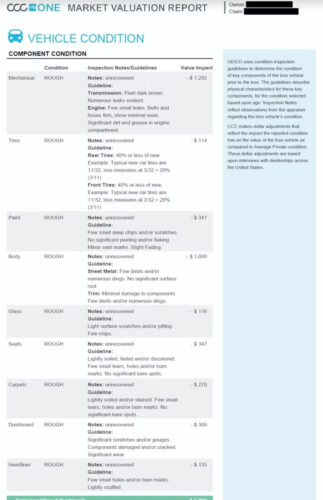
- Condition adjustments applied without clear documentation
- Regional market comps that do not reflect the price your car would command in your area
- Missing value for aftermarket upgrades or documented service history
The CCC Valuescope Report is the written output you receive. Always request the full written report from your adjuster. If the comparables listed do not match your vehicle, that is a strong reason to ask for a corrected valuation.
CCC Car Value vs. Kelley Blue Book: What Is the Difference?
Kelley Blue Book and NADA are public-facing tools that estimate market value using broad data sets. CCC is a proprietary platform used internally by insurers. The two often produce different numbers for the same vehicle, and CCC’s figure is typically lower.
This gap is meaningful. If your adjuster gives you a CCC-based offer that is $2,000 to $6,000 below what Blue Book or NADA show for your car, that difference is not a rounding error. It is the amount you are being asked to leave on the table.
How to Dispute a CCC Total Loss Valuation
You can challenge a low total loss offer. Here is how to do it effectively.
Step 1: Request the written CCC Valuescope Report
Do not accept a verbal summary. Ask your adjuster to send the full written report. Review the comparable vehicles listed, the condition adjustments applied, and the math behind the final figure.
Step 2: Document your vehicle’s actual condition and value
Gather records that support a higher valuation: maintenance logs, receipts for upgrades or recent repairs, recent private-party listings for similar vehicles in your area, and dealer pricing data for comparable cars.
Step 3: Get an independent total loss appraisal
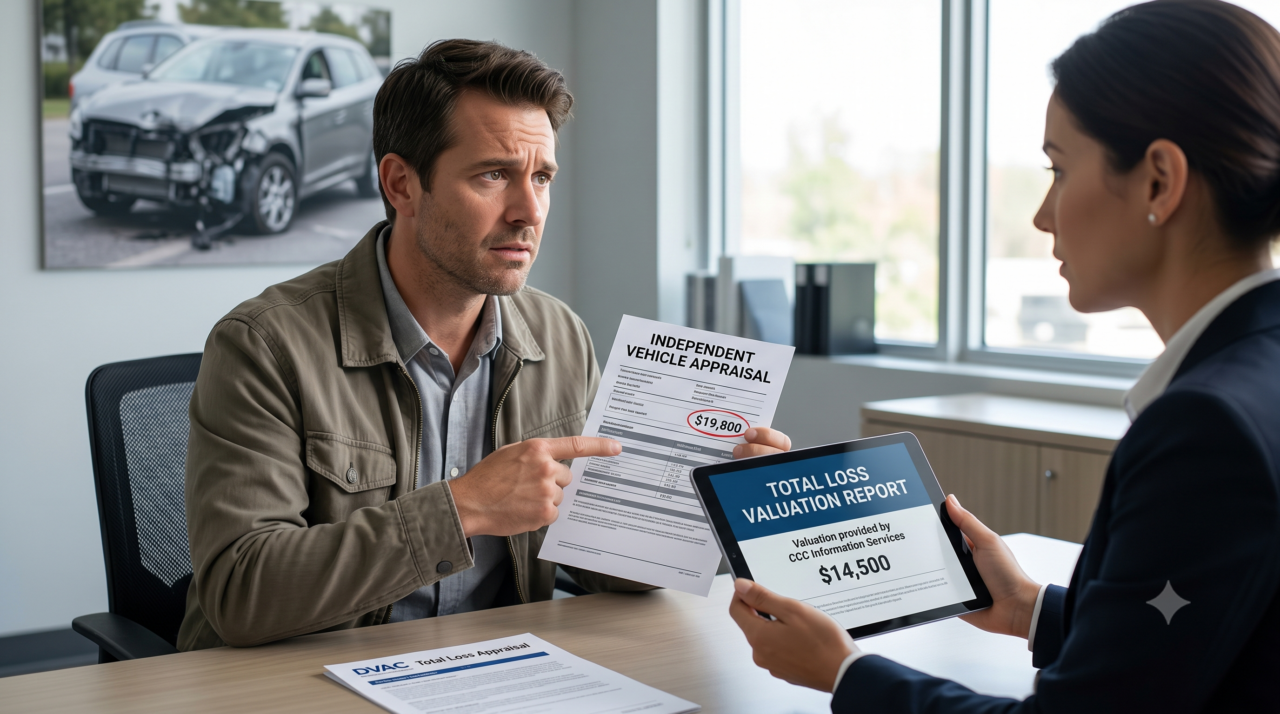
This is the most effective step. An independent appraisal from a licensed vehicle appraiser produces a formal, documented valuation using the full market picture, not the CCC methodology. An independent appraisal gives you documented, third-party evidence to support a higher valuation, and it is often what helps move the settlement number. You can get an independent total loss appraisal from DVAC to produce that documentation.
Step 4: Submit a formal written dispute
Use the independent appraisal to make a documented counteroffer. Put everything in writing. If the gap is significant, many auto insurance policies include an appraisal clause. When it applies, each side uses its own appraiser and the two select an umpire to settle the difference. Check your policy to see whether this option is available to you.
What a Correct Total Loss Settlement Actually Includes
A fair total loss settlement is not just the vehicle’s ACV. Make sure your offer accounts for:
- Actual cash value of the vehicle (ACV)
- Sales tax on the replacement vehicle
- Title and registration fees
- Any remaining loan balance beyond the ACV, if you have gap coverage
Many policyholders accept an ACV number without asking about tax, title, and tag reimbursement. These are typically owed under state law and are separate from the vehicle valuation.
This article covers total loss claims, where the vehicle is not repaired. If your car was repaired after an accident but is now worth less, that is a separate process called a diminished value claim.
DVAC Helps Vehicle Owners Dispute Inaccurate CCC Valuations
DVAC provides independent total loss appraisals for vehicle owners across all 50 states. Our appraisals are conducted by licensed appraisers using real market data, not the CCC methodology, and our reports give you the documentation you need to formally dispute a low settlement offer.
If your insurance company gave you a CCC valuation that does not reflect what your car was actually worth, an independent appraisal is the most effective next step. Learn more about our Total Loss Appraisal service.
Call DVAC at 877-879-0101 for a free consultation, or start your appraisal online.
If you get a valuation that looks like the photo below, there is good chance thousands of dollars are being shorted on the TRUE retail valuation of your vehicle: